



How to Charge an AGM Battery Properly (Voltage, Time & Best Practices)
|
|
Time to read 6 min
|
|
Time to read 6 min
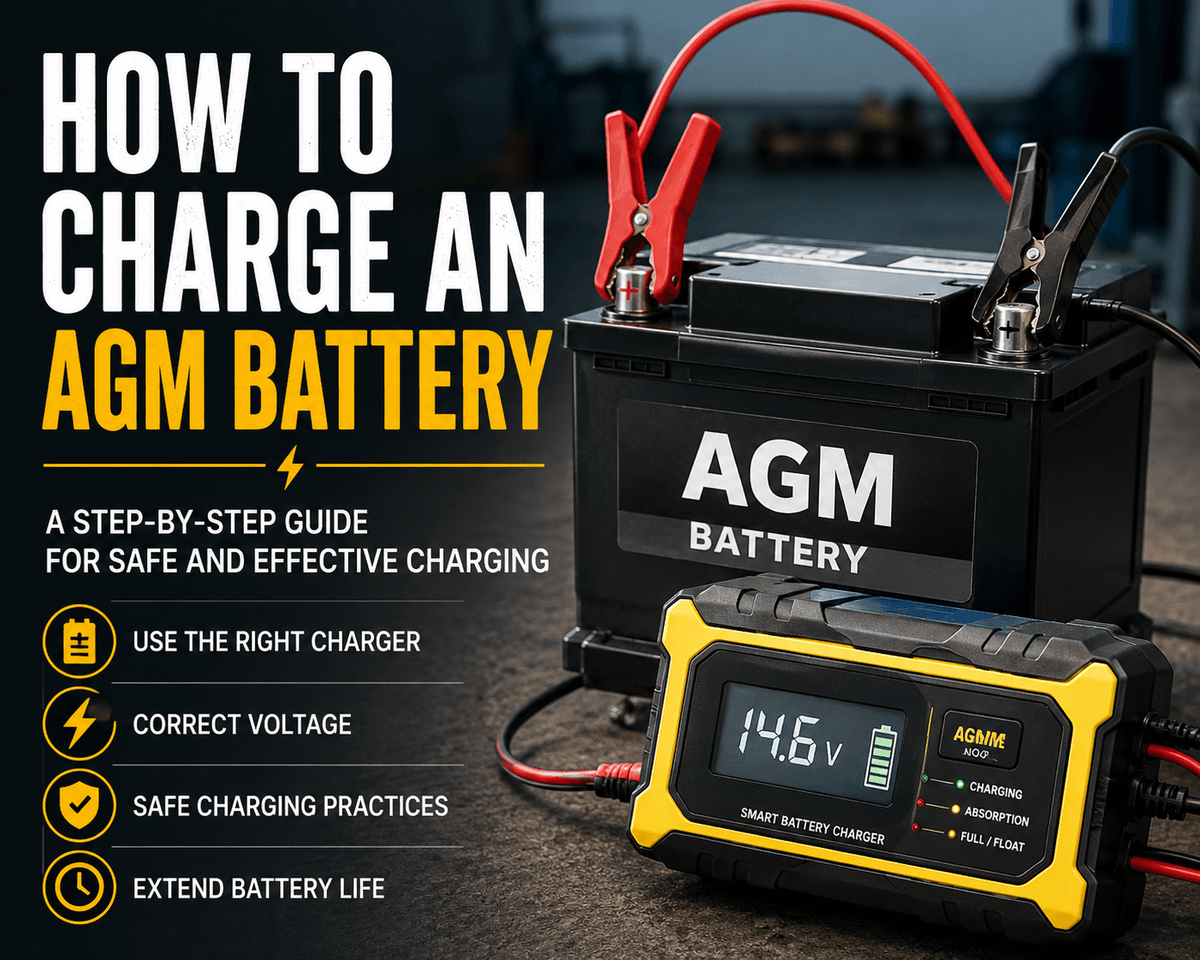
If you're wondering how to charge an AGM battery, the process is relatively simple—but using the right charger and charging settings is essential. AGM (Absorbent Glass Mat) batteries require a controlled charging profile to maintain performance and maximize lifespan.
To charge an AGM battery, connect it to an AGM-compatible smart charger, select AGM mode if available, and allow the charger to complete the charging cycle. Most AGM batteries charge at 14.4V–14.8V during the bulk charging stage and 13.2V–13.8V during float charging.
In this guide, we'll walk you through the charging process, explain the recommended voltage settings, and cover common mistakes to avoid.
Quick in
Charging an AGM battery correctly helps prevent undercharging, overcharging, and premature battery failure.
Before charging, inspect the battery for any signs of damage, including:
If the battery is damaged, replace it rather than attempting to charge it.
If you notice corrosion around the terminals, consider cleaning the battery terminals before charging to ensure a secure connection and efficient power transfer.
For best results, use a smart charger specifically designed for AGM batteries.
A quality AGM charger can:
Using the correct charger helps extend battery life and improves charging efficiency.
If you're comparing charging solutions, understanding the differences between a battery charger and a jump starter can help you choose the right tool for your needs.
Follow these steps:
Always follow the charger's instructions for safe operation.
Many modern chargers support multiple battery types.
If your charger has an AGM setting, select it before charging. This ensures the charger delivers the proper voltage and charging profile required by AGM batteries.
Turn on the charger and let it complete the charging cycle.
Avoid disconnecting the battery prematurely, as incomplete charging can reduce battery capacity over time. If your battery repeatedly loses charge or struggles to start your vehicle, it may be worth learning how often a car battery should be replaced.
Most smart chargers will automatically stop charging or switch to float mode once the battery reaches full charge.
After charging is complete:
Your AGM battery is now ready for use.
While some conventional battery chargers can charge AGM batteries, a dedicated AGM-compatible smart charger is highly recommended.
Look for a charger with:
These features help optimize charging performance and reduce the risk of battery damage.
If your vehicle battery becomes discharged unexpectedly, a portable jump starter can also help get you back on the road quickly. While a jump starter is not designed to recharge a battery, it provides the power needed to start your vehicle when the battery voltage is too low.
Charging voltage varies slightly between manufacturers, but most 12V AGM batteries follow these general guidelines:
| Charging Stage | Recommended Voltage |
| Bulk Charging | 14.4V–14.8V |
| Absorption Charging | 14.4V–14.8V |
| Float Charging | 13.2V–13.8V |
Charging above the recommended voltage can cause overheating and shorten battery life.
Always consult your battery manufacturer's specifications if available.
Charging time depends on battery capacity, charger output, and the battery's state of charge.
| Battery Capacity | Charger Output | Estimated Charging Time |
| 50Ah | 5A | 10–12 Hours |
| 75Ah | 10A | 7–9 Hours |
| 100Ah | 10A | 10–12 Hours |
| 100Ah | 20A | 5–6 Hours |
A partially discharged battery may require less time, while a deeply discharged battery may take significantly longer to recover.
Technically, yes—but it may not be the best option.
Older chargers designed for flooded lead-acid batteries often lack the voltage regulation needed for AGM batteries. This can result in:
If you must use a standard charger, carefully monitor charging voltage and avoid exceeding the manufacturer's recommendations.
Whenever possible, use a charger that specifically supports AGM batteries.
AGM stands for Absorbent Glass Mat, a type of sealed lead-acid battery that uses fiberglass mats to hold the electrolyte.
Compared with traditional flooded batteries, AGM batteries offer several advantages:
Because of these benefits, AGM batteries are commonly found in:
Avoiding these common mistakes can help maximize battery life.
This is a common misconception.
A portable jump starter is designed to provide a short burst of high current to start a vehicle with a weak or dead battery. It is not intended to fully recharge an AGM battery.
However, carrying a jump starter can be extremely valuable in emergencies. If your AGM battery loses enough charge that your vehicle won't start, a jump starter can help you get moving again without needing another vehicle for assistance.
For long-term charging and battery maintenance, always use a dedicated AGM battery charger.
Q1. Can You Overcharge an AGM Battery?
Yes. Overcharging an AGM battery can cause overheating, reduce capacity, and shorten its lifespan. Using a smart charger with AGM mode helps prevent overcharging.
Q2. Do AGM Batteries Need a Special Charger?
Not necessarily, but an AGM-compatible charger is recommended. It provides the correct charging profile and helps maximize battery performance and lifespan.
Q3. Can I Charge an AGM Battery While It's Connected to the Vehicle?
In many cases, yes. However, always check your vehicle owner's manual and charger instructions before charging.
Q4. Can a Dead AGM Battery Be Charged?
Yes, a dead AGM battery can often be recharged if it has not been permanently damaged. A smart charger with a recovery mode may help restore it.
Q5. What Happens If You Charge an AGM Battery with a Normal Charger?
A normal charger may not provide the ideal voltage for AGM batteries, potentially leading to undercharging, overcharging, or reduced battery life.
Q6. Is It Okay to Use a Trickle Charger on an AGM Battery?
Yes, provided the trickle charger is AGM-compatible and properly regulates voltage. It can be useful for long-term battery maintenance.
Q7. What Happens If an AGM Battery Is Deeply Discharged?
Deep discharge can cause sulfation, reducing the battery's ability to hold a charge. Prompt recharging may help recover the battery, but repeated deep discharges can shorten its lifespan.
Q8. What's the Best Way to Charge an AGM Battery?
The best way is to use a smart charger with an AGM setting, follow the manufacturer's voltage recommendations, and allow the battery to complete its charging cycle fully.
Knowing how to charge an AGM battery properly can help you maximize battery performance, improve reliability, and extend service life. By using an AGM-compatible smart charger, following recommended voltage guidelines, and avoiding common charging mistakes, you can keep your battery operating at its best for years to come.
Whether you're maintaining a vehicle battery, RV battery, marine battery, or backup power system, proper charging is one of the most important steps in protecting your investment.