



How to Reset the Check Engine Light Without Disconnecting the Battery
|
|
Time to read 6 min
|
|
Time to read 6 min
A check engine light can be stressful—especially when your car still seems to run fine. Many drivers immediately think about disconnecting the battery to reset the light, but that method isn’t always safe or recommended. It can erase important ECU data, reset vehicle settings, and sometimes create new issues.
In this guide, we’ll show you how to reset the check engine light without disconnecting the battery, explain when it’s safe to do so, and clarify how battery-related issues (including jump-start situations) often trigger this warning in the first place.
The check engine light (CEL) is part of your vehicle’s onboard diagnostics system. It turns on when the ECU detects something outside normal operating parameters.
Common causes include:
⚠️ Important:
Disconnecting the battery might seem like a quick fix, but it comes with downsides:
That’s why many drivers look for safer ways to reset the check engine light without disconnecting the battery.
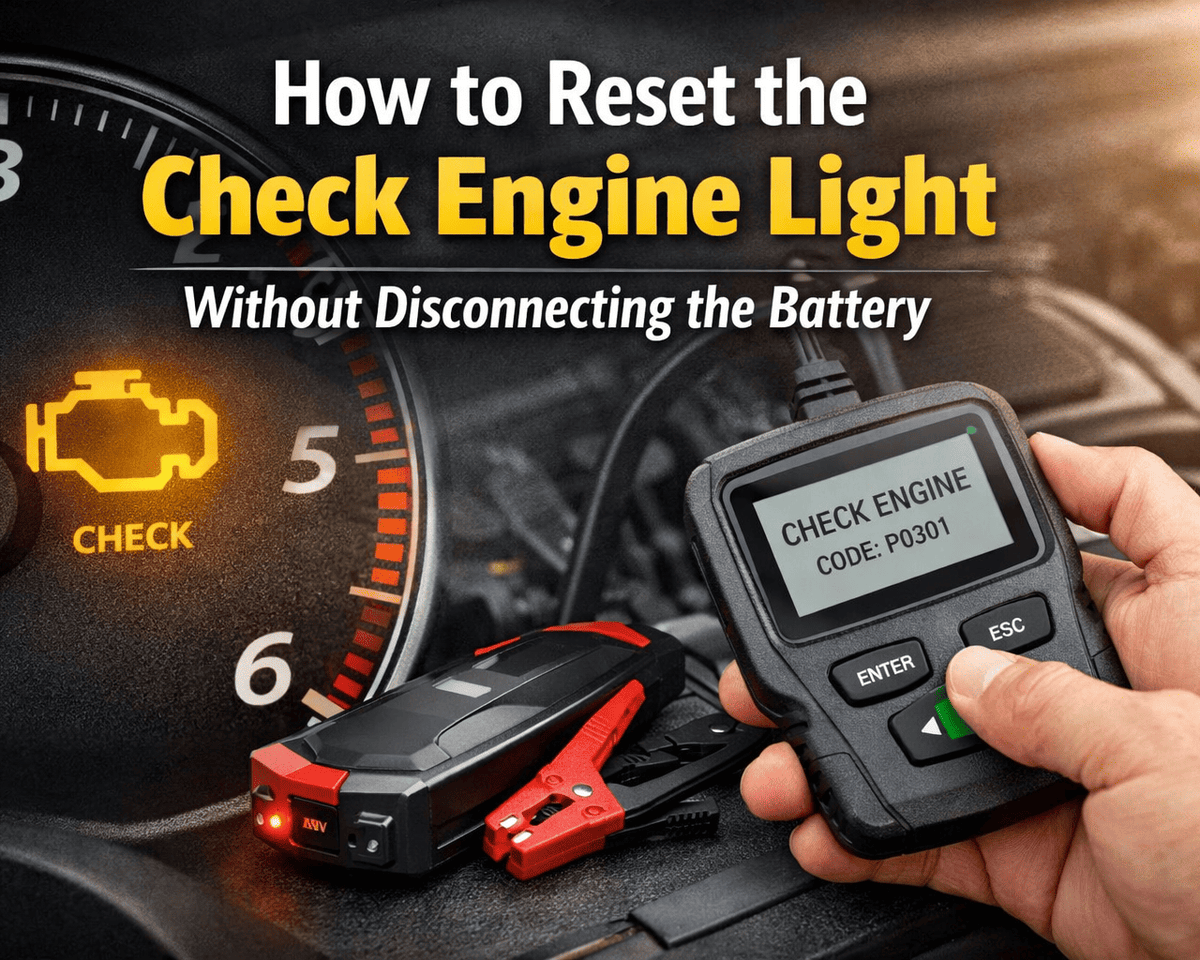
Using an OBD2 scanner is the safest and most accurate way to reset the check engine light without disconnecting the battery. It allows you to identify the exact trouble code, understand what triggered the warning, and clear it properly. Steps:
An OBD2 scanner is especially useful if your check engine light appeared after a weak battery, failed start, or jump-start situation, as low voltage often triggers temporary fault codes.
Some minor issues reset automatically after the ECU completes a full drive cycle.
A typical drive cycle includes:
If the issue was temporary, the light may turn off on its own after several trips.
A loose gas cap is one of the most common causes of a check engine light.
What to do:
If this was the issue, the light should reset automatically.
This method doesn’t work on most modern vehicles but may help in older cars.
Note: In modern "Push-to-Start" vehicles, this method is generally obsolete. Even on older cars, this often only reveals the code so you can research the fault; it rarely "erases" the light without a repair.
Technical Note: Pulling the ECU or ECM fuse has a similar effect to disconnecting the battery. It cuts power to the Keep Alive Memory (KAM).
The Risk: While it preserves your radio presets, it still wipes the ECU’s "learned" data. This may result in rough idling or erratic shifting for the first 10–20 miles as the computer relearns the engine’s operating parameters.
Many drivers notice the check engine light turns on after a dead battery or failed start. This happens because:
A portable jump starter can get your engine running again—but it won’t automatically clear stored fault codes. That’s why resetting the check engine light properly is often the next step after a jump start.
Do not reset the light if:
Resetting the light does not fix mechanical problems—it only clears the warning.
Yes, if the underlying issue still exists. If the light returns:
Recurring battery-related issues may indicate it’s time to test or replace the battery—or keep a reliable jump starter on hand for emergencies.
Q1. How to turn off the check engine light without disconnecting the battery?
You can turn off the check engine light without disconnecting the battery by using an OBD2 scanner, completing a proper drive cycle, or fixing a minor issue such as a loose gas cap. The safest and most accurate method is to scan the trouble code and clear it electronically, which avoids resetting the ECU or losing vehicle settings.
Q2. Can I manually reset my check engine light?
In some cases, yes. If the issue was temporary—such as low battery voltage or a failed start—the check engine light may reset on its own after several normal driving cycles. However, manually resetting the light without identifying the cause may result in the warning coming back if the problem still exists.
Q3. How long does a check engine light take to reset?
The reset time varies depending on the cause. For minor or temporary issues, the check engine light may turn off after a few drive cycles or within a few days of normal driving. If the underlying issue remains, the light will stay on or return even after a reset attempt.
Q4. How to clear the engine code without a scanner?
Without a scanner, the only reliable way to clear an engine code is to resolve the issue that triggered the warning and allow the ECU to reset the light naturally through normal driving. Methods like drive cycles or tightening the gas cap may work for minor issues, but they are less precise than using an OBD2 scanner.
Q5. Will unplugging the battery reset the check engine light?
Yes, unplugging the battery can reset the check engine light, but it is not recommended. Disconnecting the battery may erase ECU learning data, reset vehicle settings, and cause drivability issues. In addition, the light will likely come back if the underlying problem has not been fixed.
Q6. How long does the check engine light stay on after replacing the battery?
After replacing the battery, the check engine light may stay on for a short period while the ECU recalibrates. In many cases, the light will turn off after a few drive cycles. If it remains on, scanning the vehicle for stored fault codes can help determine whether the issue is battery-related or caused by another component.
Knowing how to reset the check engine light without disconnecting the battery helps you avoid unnecessary resets and protect your vehicle’s electronics.
However, prevention matters just as much:
A compact jump starter is one of the simplest tools you can carry to handle unexpected battery issues—especially in cold weather or remote locations.